


REPORT CARD
For the Coastal and Marine Zones of the
Gulf of Mexico 2026
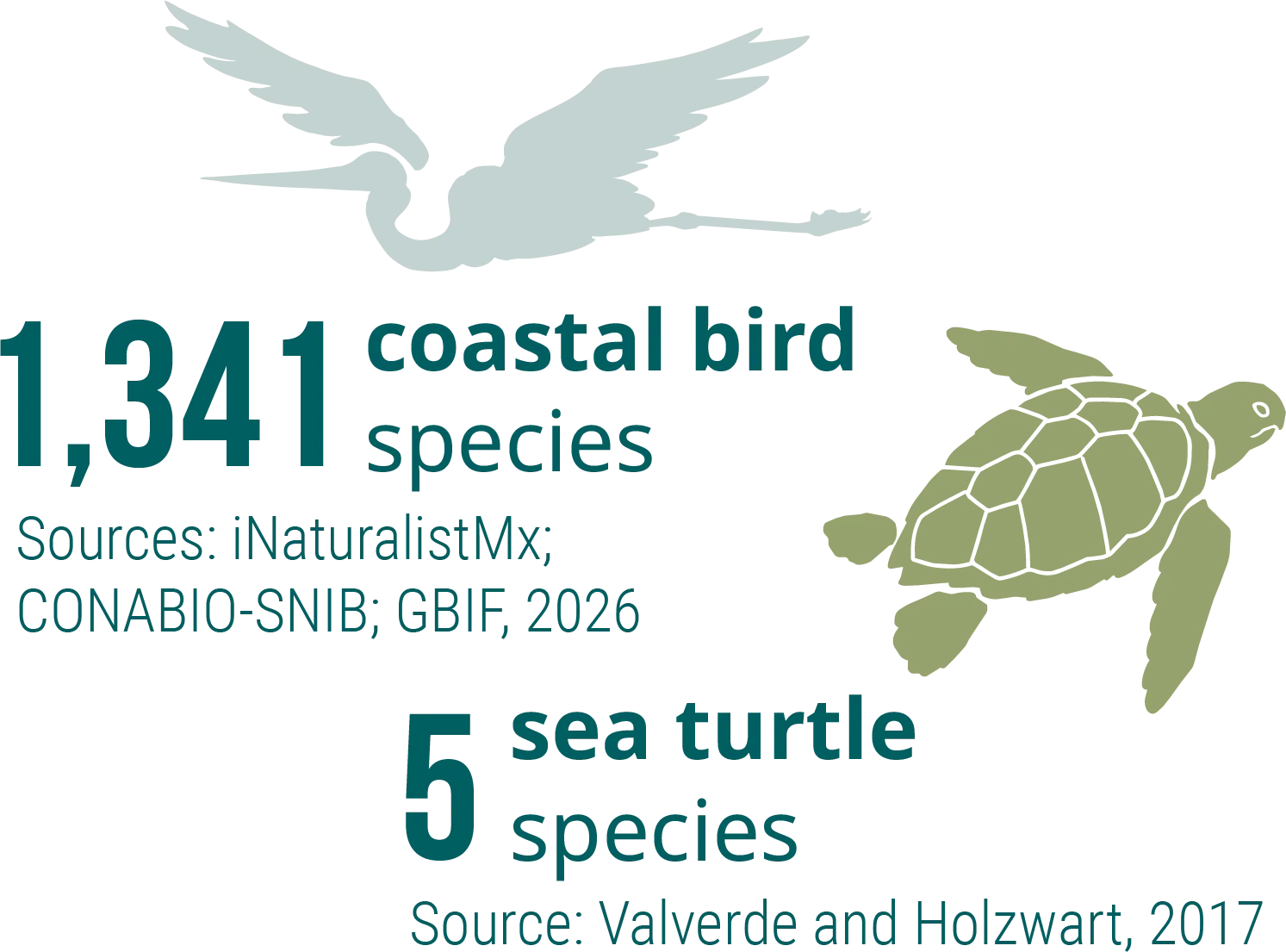
THE GULF OF MEXICO IN NUMBERS
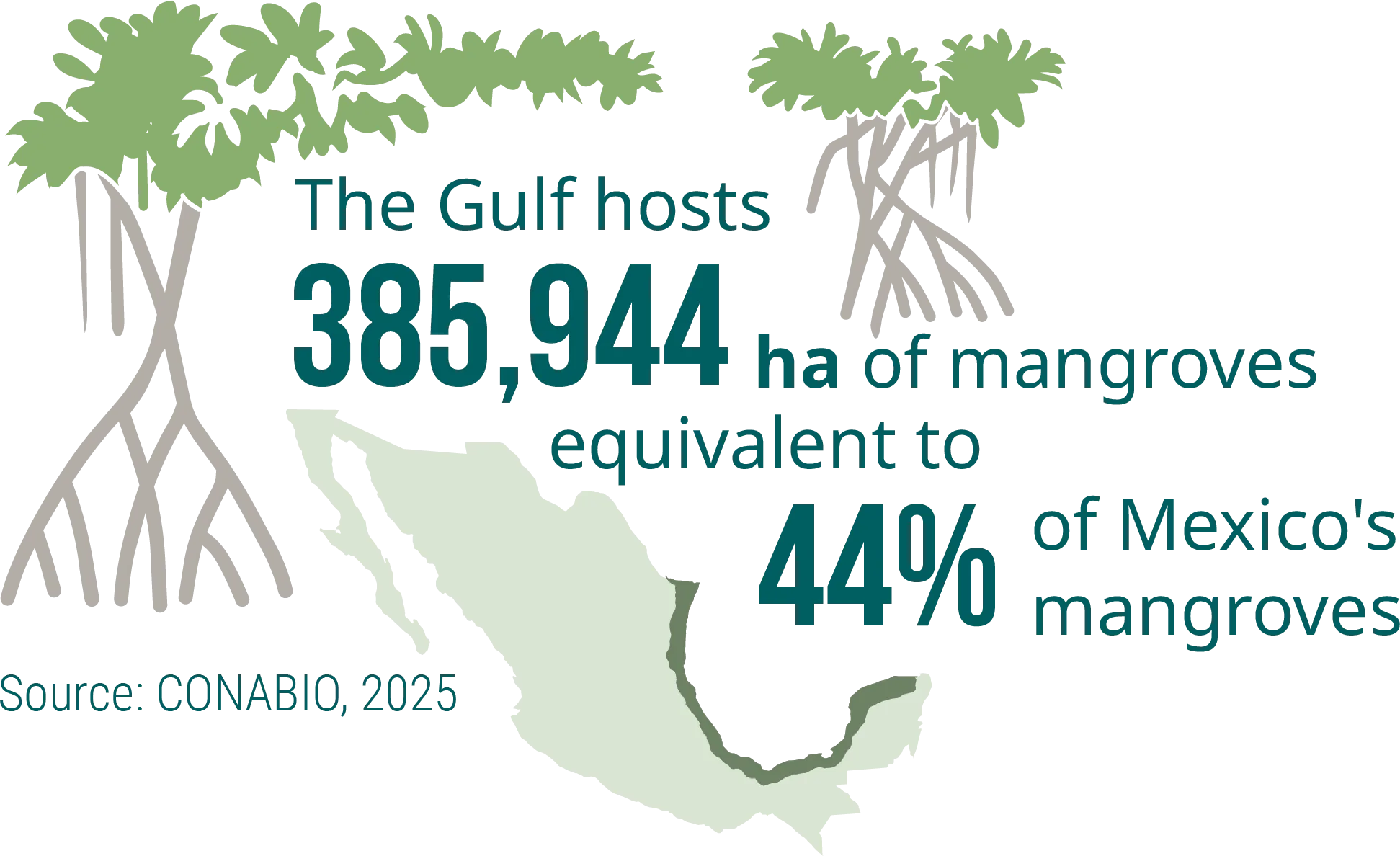
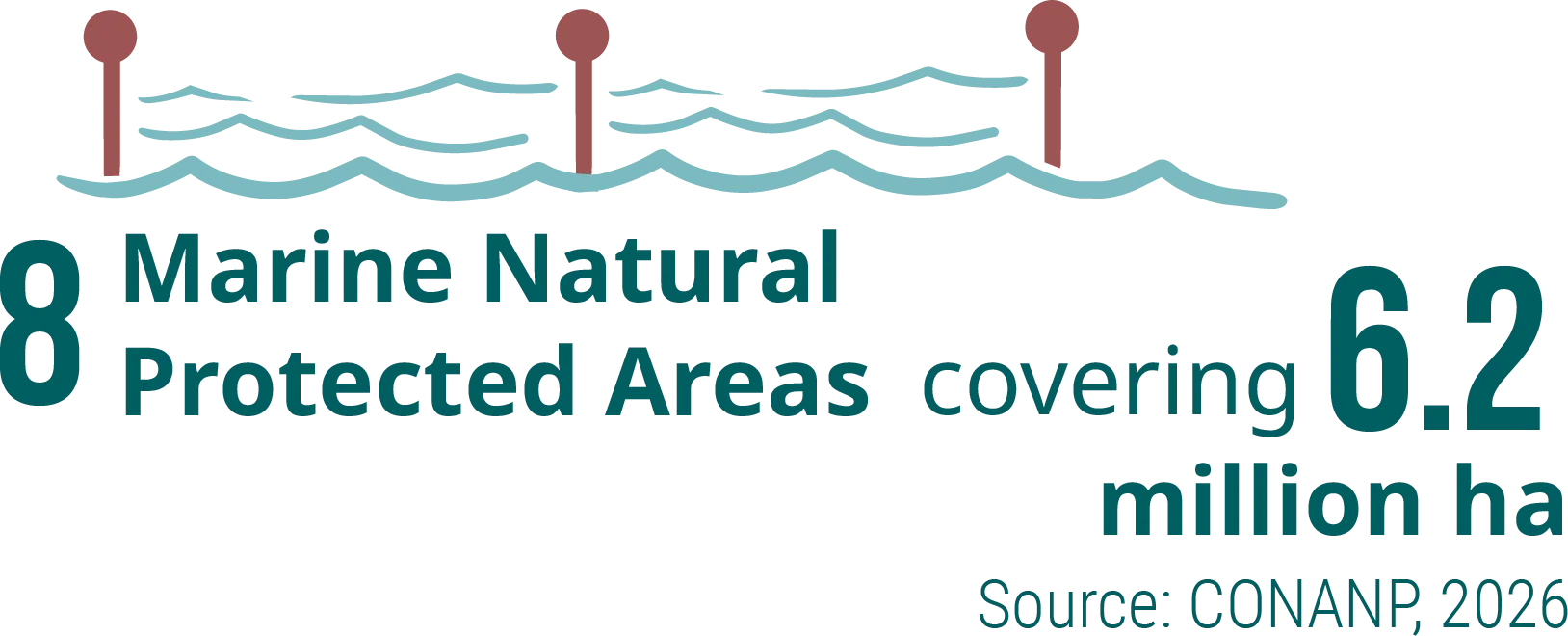
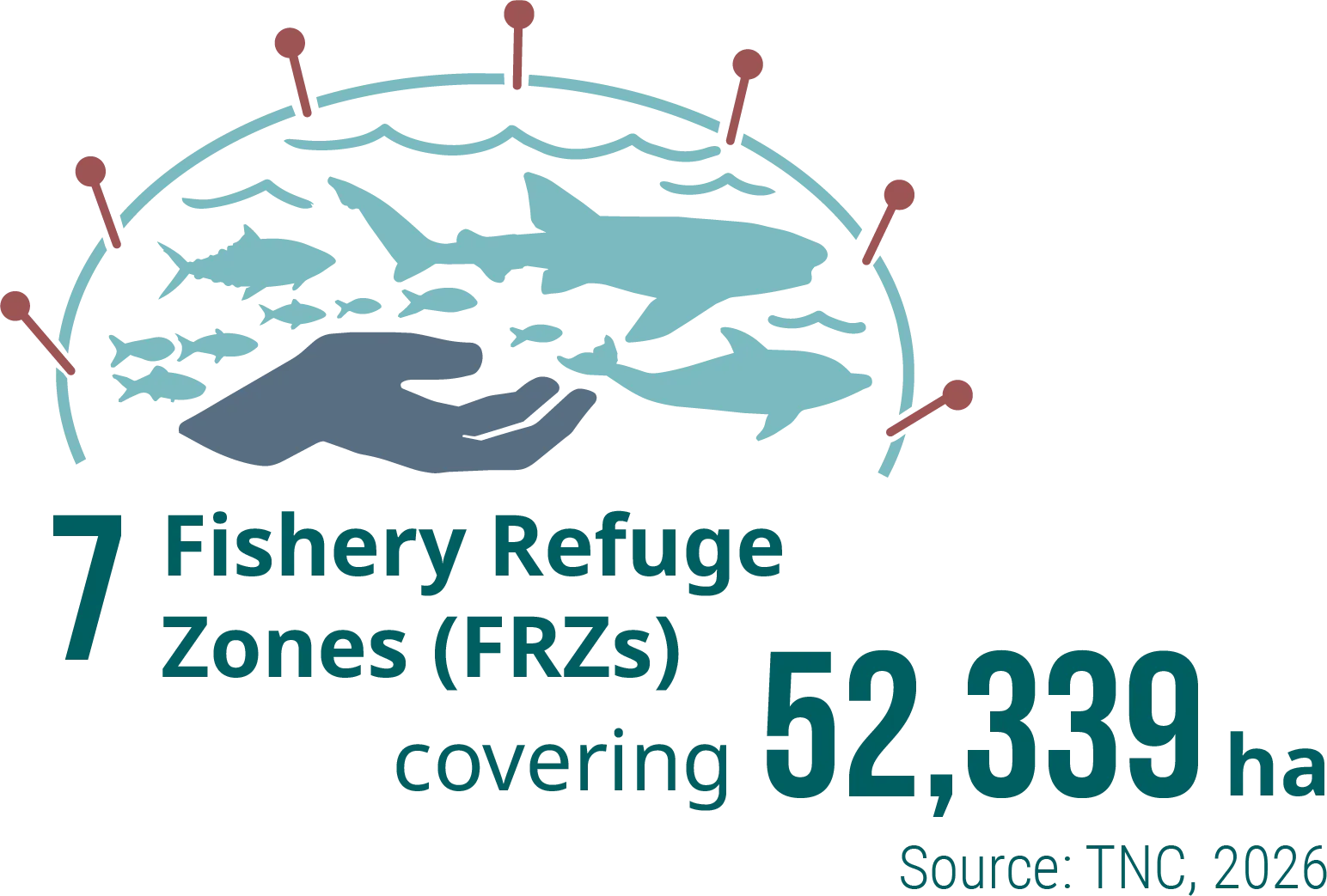
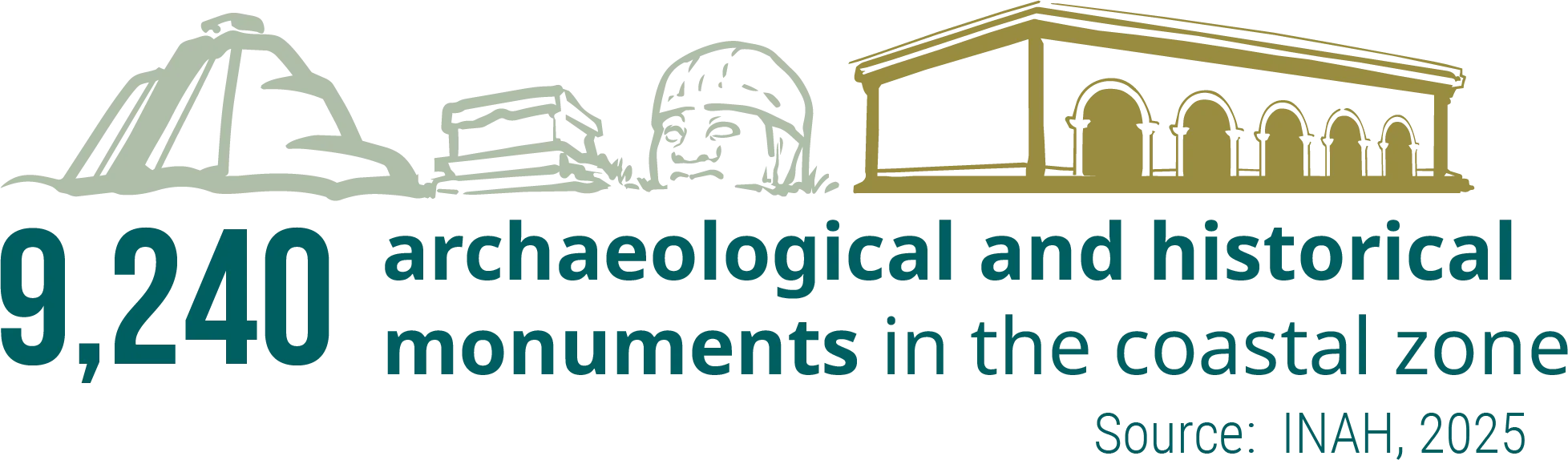
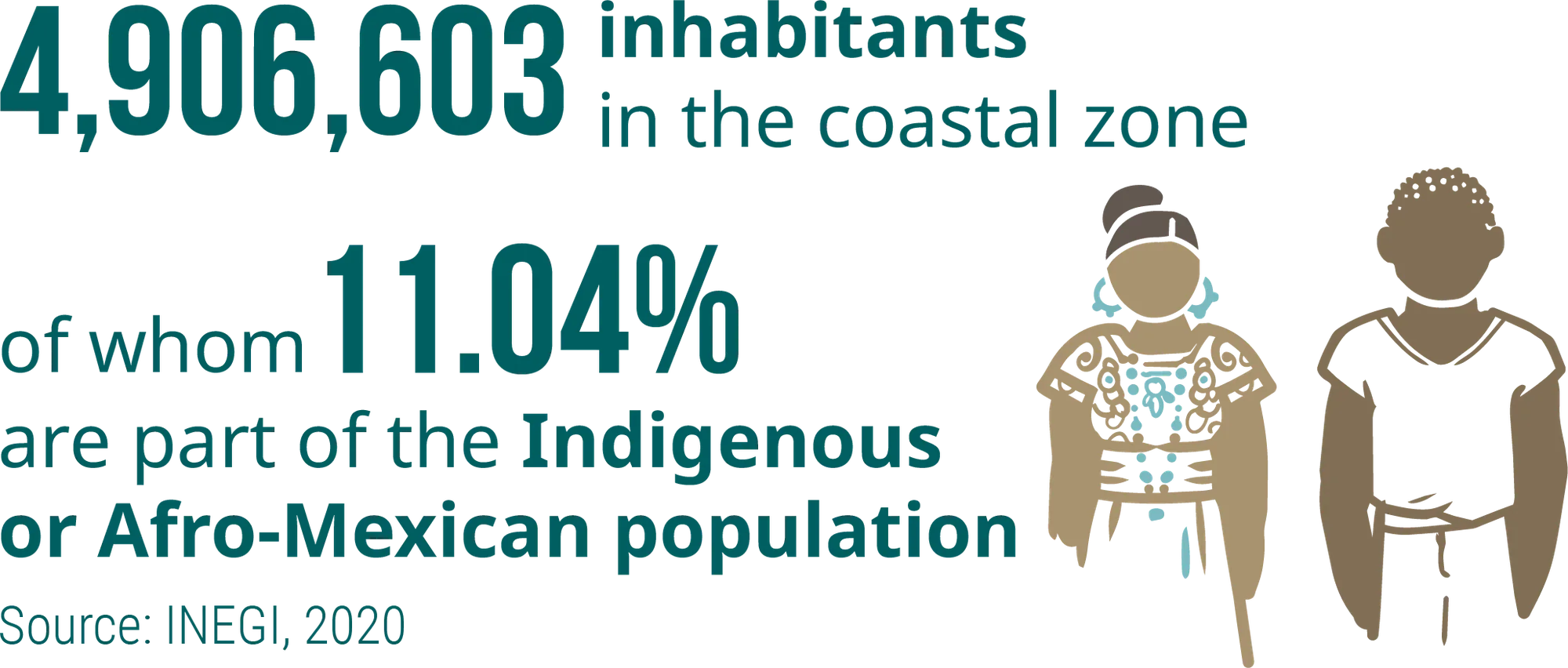
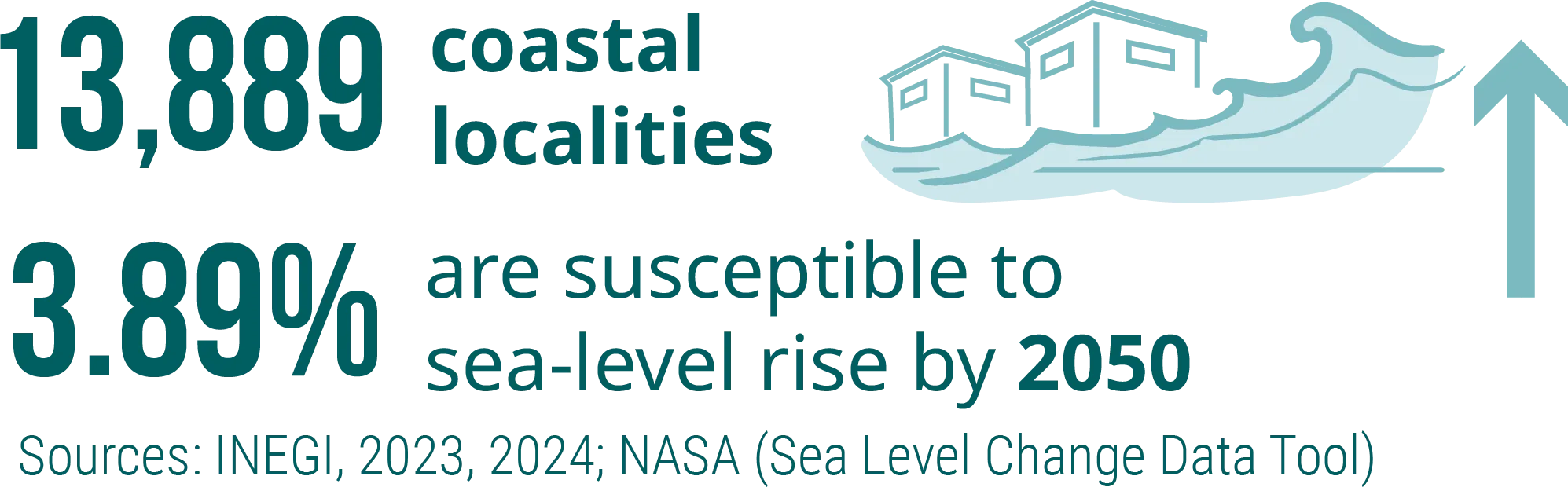
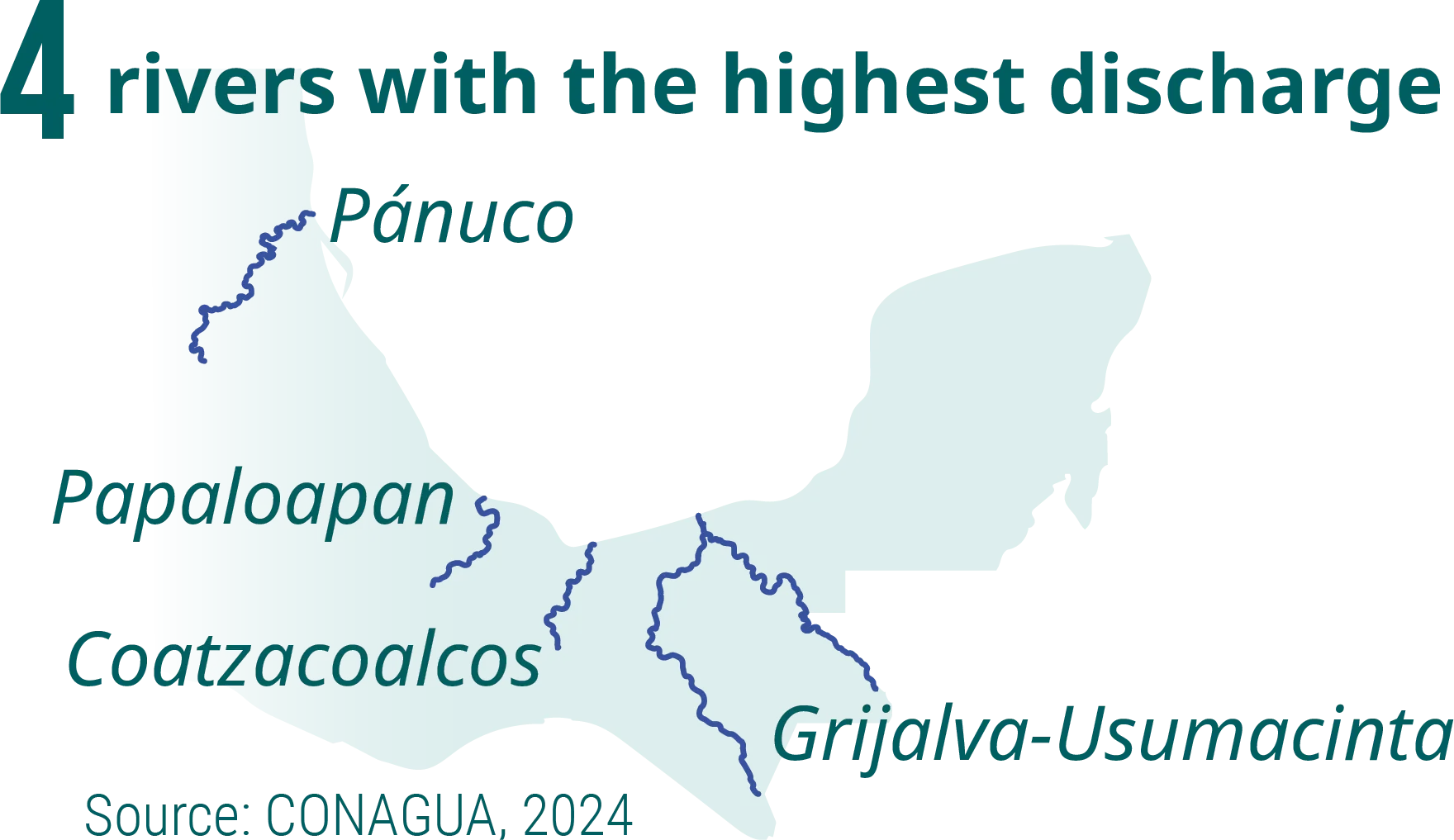
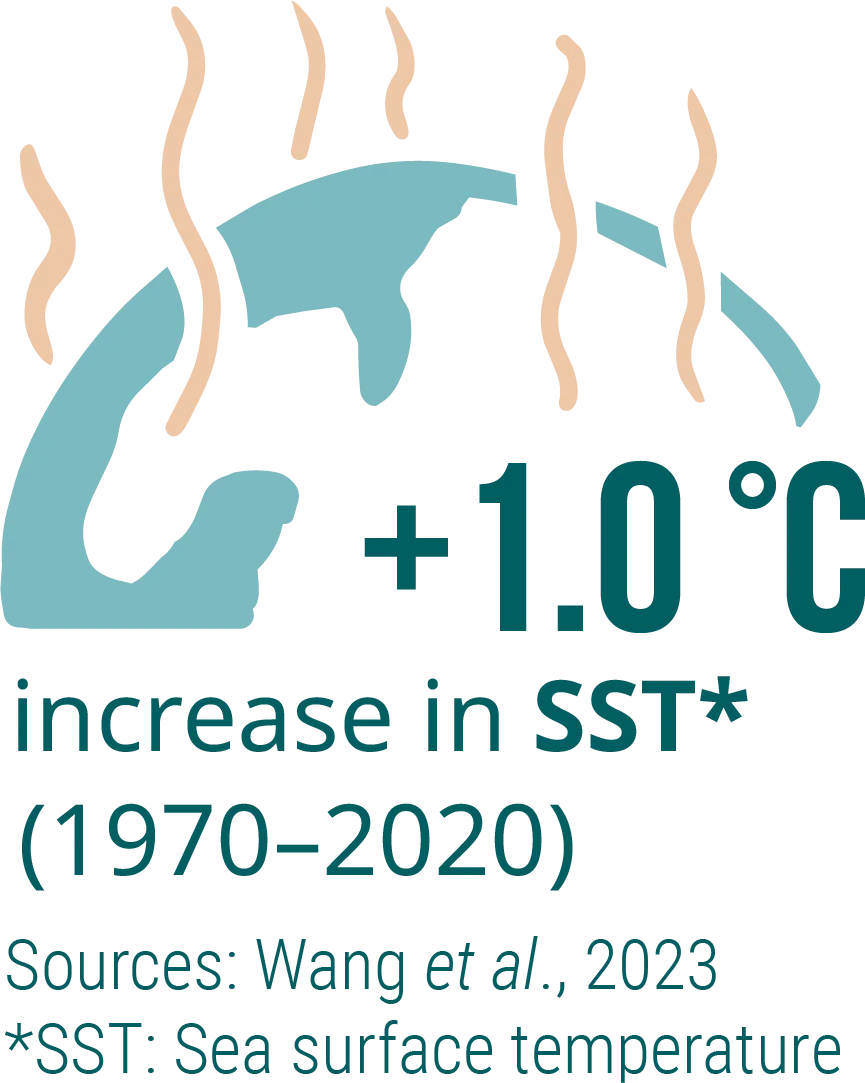
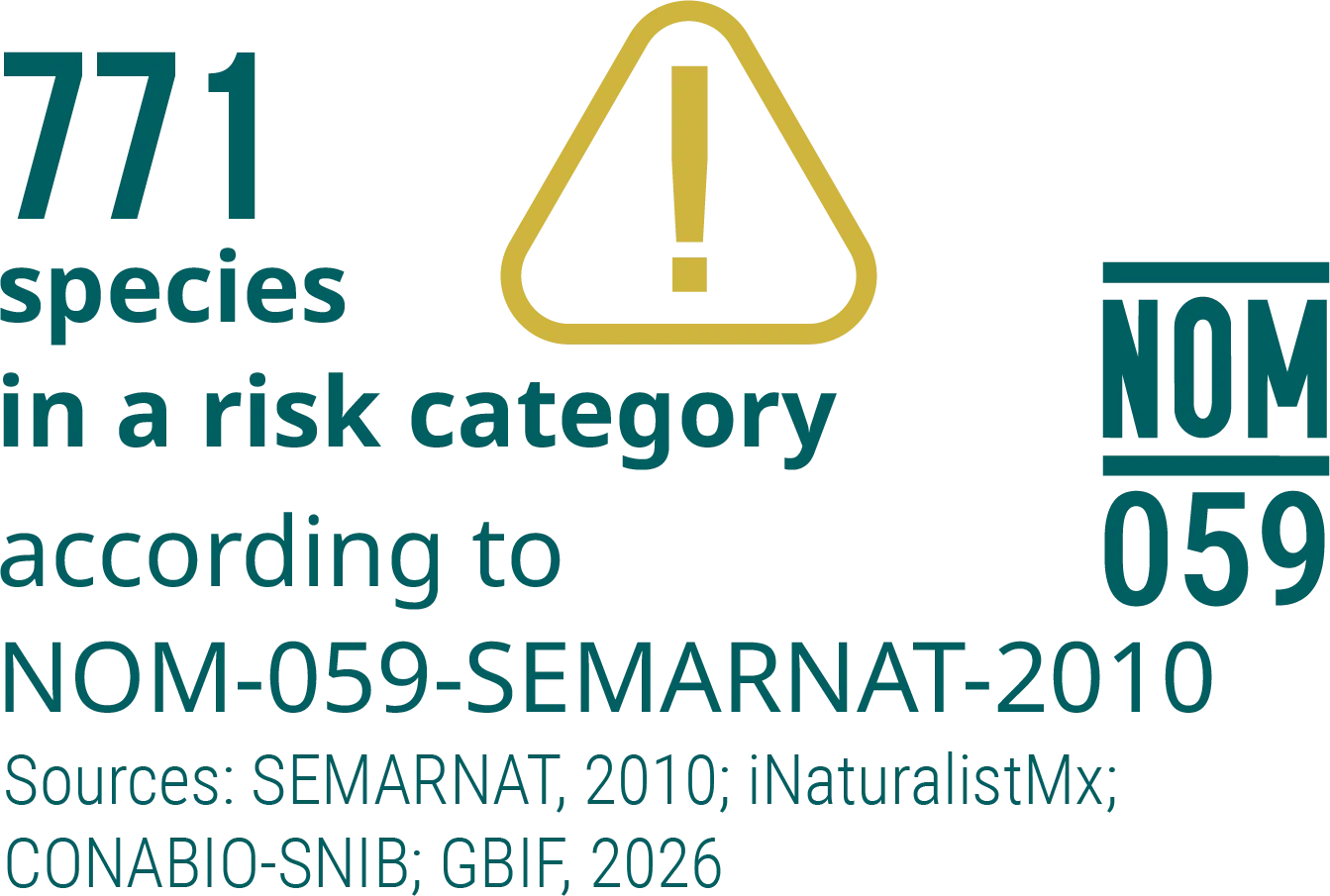
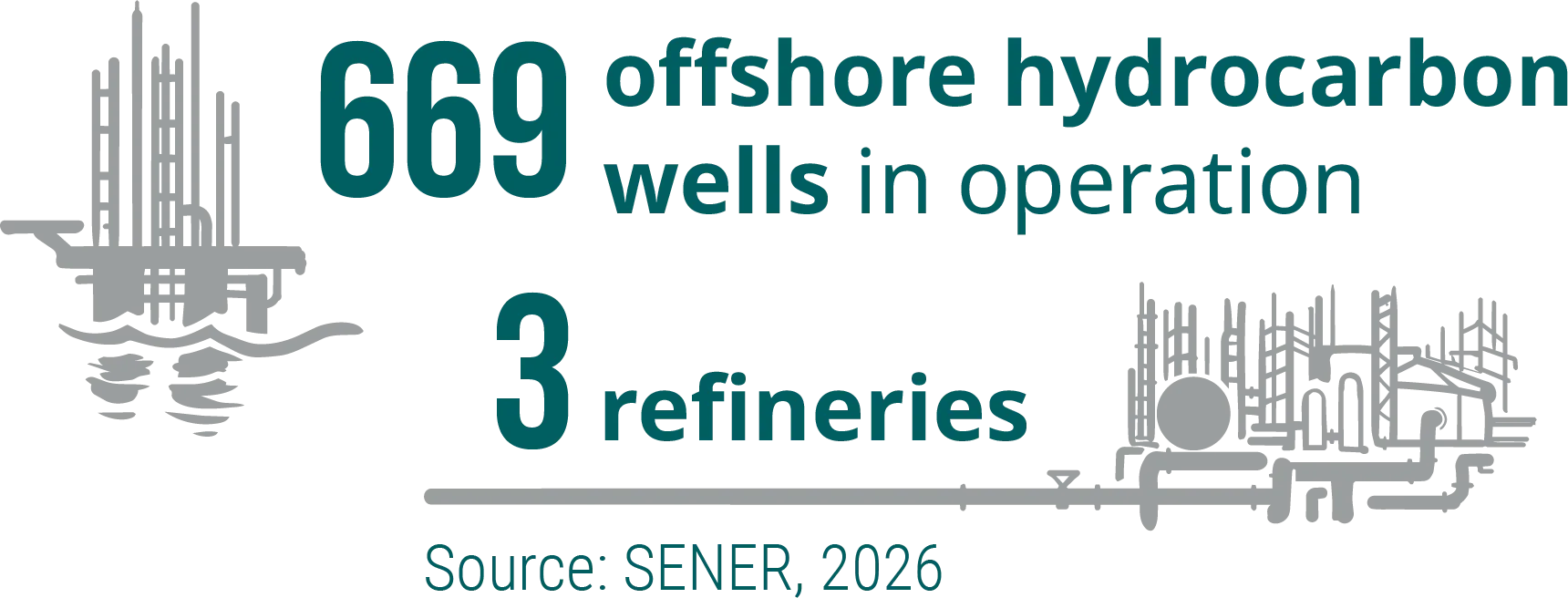
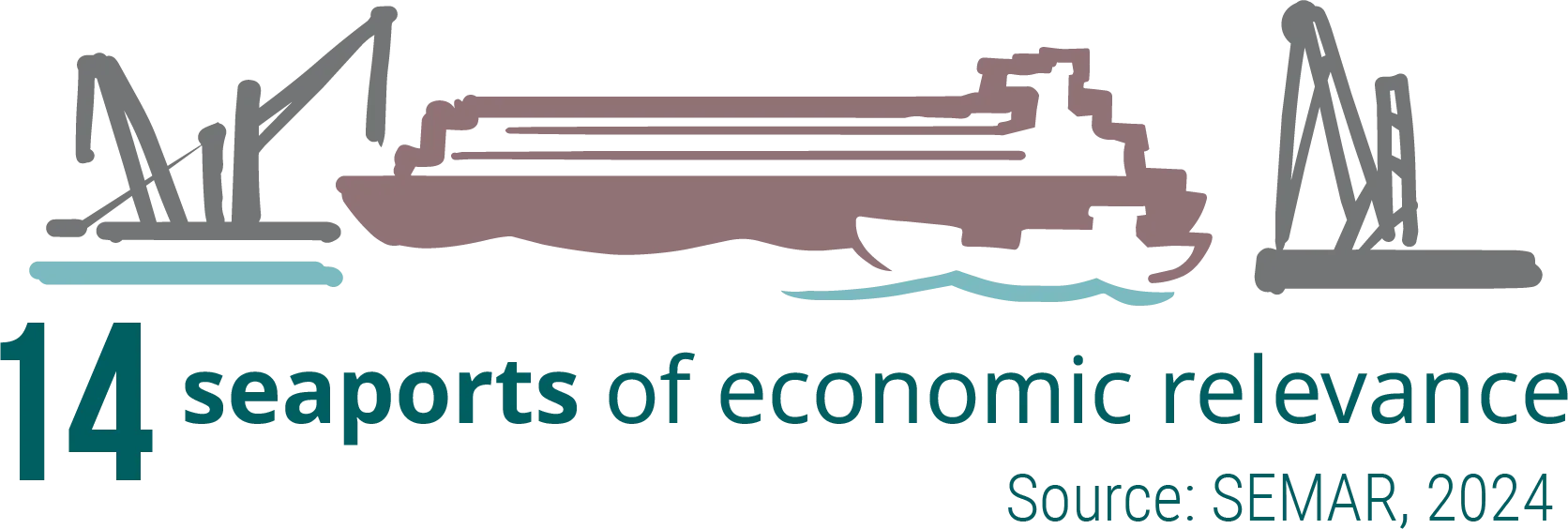
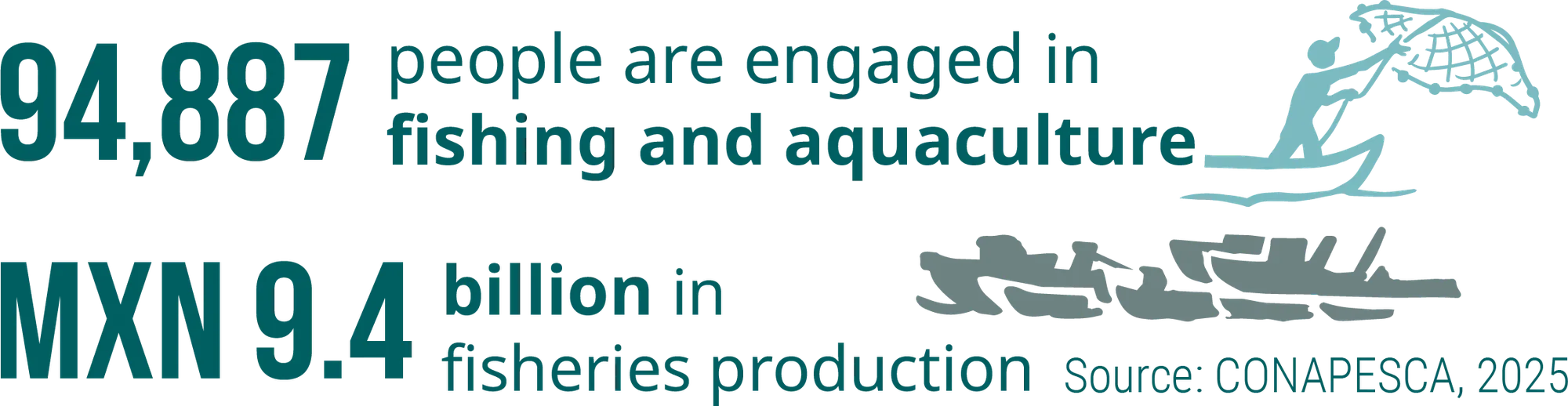
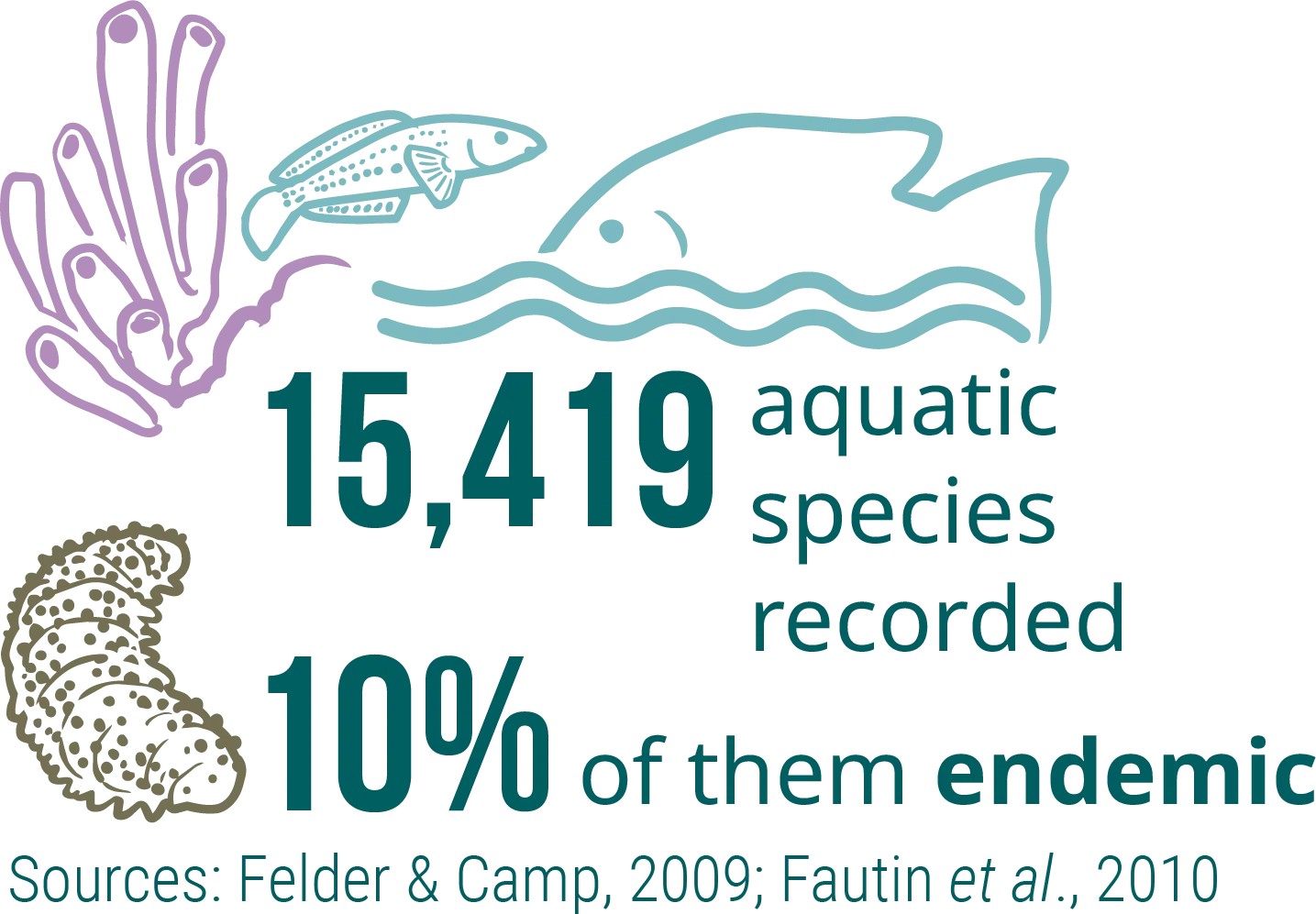
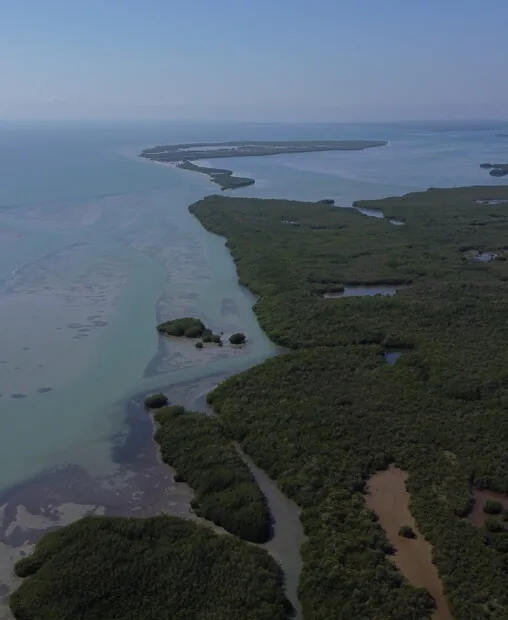
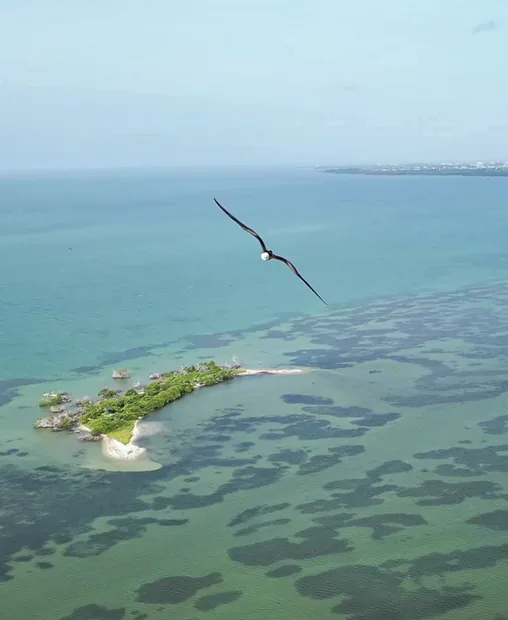
IMPORTANCE OF THE GULF OF MEXICO
STRATEGIC ACTION PROGRAM OF THE GULF OF MEXICO LARGE MARINE ECOSYSTEM (SAP GOM)
Gulf of Mexico
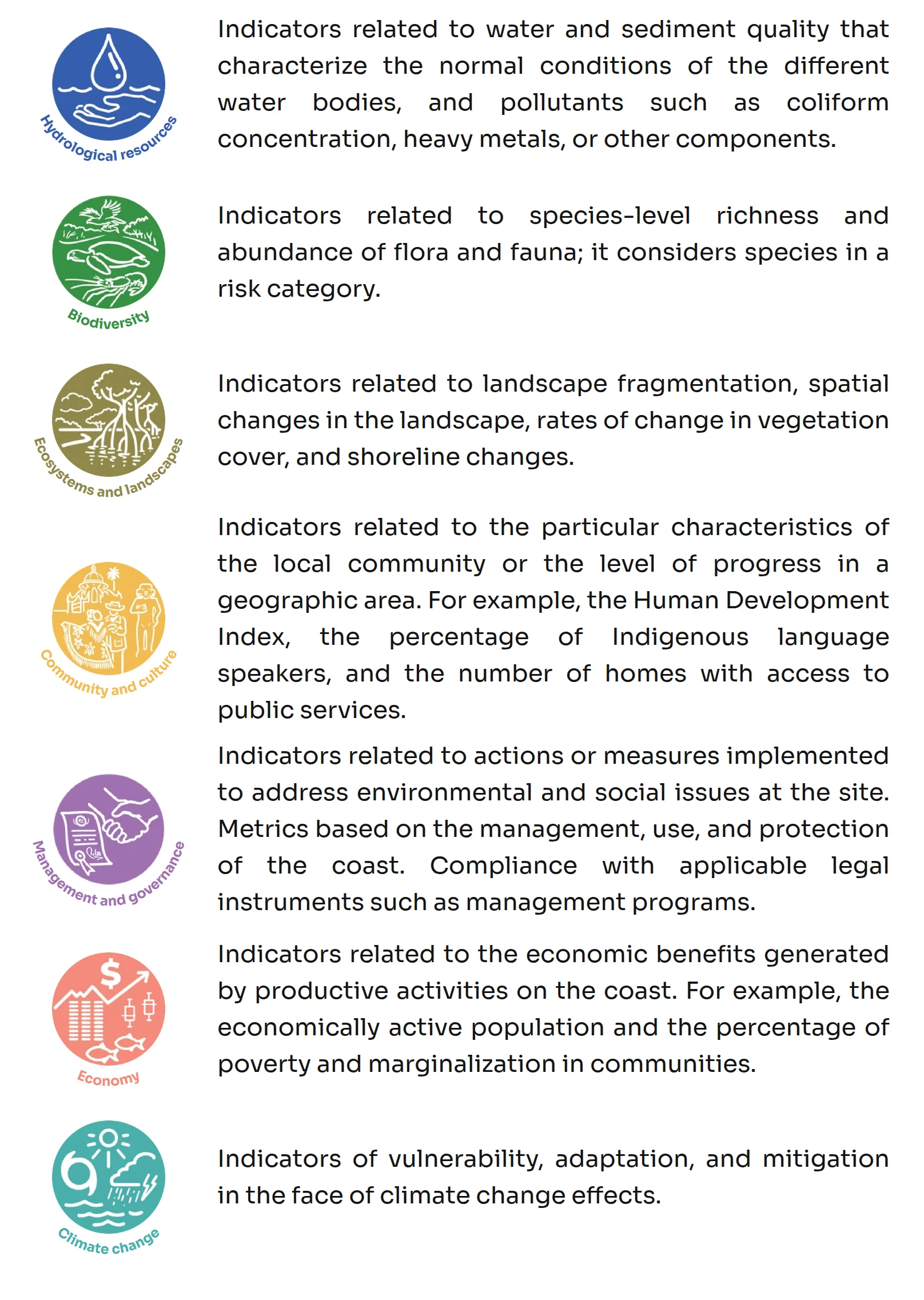
Thematic groups
↑ Select a thematic group to see its indicators
Indicators
INDICATORS
Gulf of Mexico
Thematic groups
↑ Select a thematic group to see its indicators
Indicators
RECOMMENDED COURSES OF ACTION
Based on scientific evidence and contributions from key stakeholders, priority impacts, goals, and actions were identified. The following framework links these elements with proposals for prevention, regulation, monitoring, restoration, financing, and interinstitutional and social coordination. These actions are aimed at conserving the functionality of Gulf of Mexico coastal and marine socioecosystems and strengthening their capacity to respond to the pressures affecting them.
-
Climate change and coastal vulnerability
Reduce physical and ecosystem-related vulnerability to hydrometeorological events and sea-level rise through binding land-use planning and local early-response capacity.
Action
Integrate and update higher-resolution municipal coastal risk maps.
Products
-

Risk atlases and adaptation plans.
-

Early warning and response plans for climate emergencies.
-
-
Water pollution and sanitation deficit

Reduce pollutant sources and loads from wastewater discharged into water bodies to prevent trophic degradation of coastal and marine ecosystems.
Action

Audit treatment systems and conduct interinstitutional inspections of non-domestic discharges.
Products
-

Modern, self-financing treatment systems compliant with NOM-001-SEMARNAT-2021.
-

Financing schemes for operation, maintenance, and staffing.
-
-
Pollution from Municipal Solid Waste (MSW) and microplastics
Reduce the generation and dispersal of MSW and microplastics into ecosystems through infrastructure for separation, containment, transfer, final disposal, and cleanup.
Action
Implement mandatory waste-separation regulations and standardized waste-characterization protocols.
Products
-
Sustainable infrastructure for integrated, differentiated waste management.
-

Community protocol for monitoring and characterization of microplastics and MSW.
-
-
Technical, social, and regulatory fragmentation
Integrate scientific evidence and citizen science as technical inputs for updating, monitoring, and evaluating the Gulf of Mexico Marine and Regional Ecological Land-Use Planning Program (POEMRGM).
Action

Standardize environmental monitoring through open data and foster multilevel, cross-sector coordination.
Products
-

Open-data platform linked to POEMRGM.
-
Participatory ecohydrological restoration models implemented locally.
-
-
Fishing pressure
Restore the balance between biomass and catch in priority fisheries by quantifying unreported fishing effort and updating sustainable catch limits.
Action
Implement methodologies and censuses to improve the quantification of fishing effort.
Products
-
Updated fishery plans with adjusted stock assessments.
-

Officially published economic assessments of fishery value chains.
-
-
Hydrocarbon pressure

Regulate permits in protected areas and strengthen local capacity for early detection, operational containment, and cross-sector spill remediation, reducing impacts on sensitive ecosystems and productive activities.
Action
Regulate permits and standardize early-warning protocols in vulnerable areas.
Products
-

Public, interoperable spill early-warning system.
-
Interinstitutional mechanism for economic recovery and impact assessment.
-
PARTICIPANTS

Balderrama Alarcón, J. A., API Tamaulipas; Di Costanzo Salazar, G., CANAINPESCA; Chan Quijano, J. G., Hernández Alonso, A., Hidalgo Rodríguez, G., Rojas Carranco, V. G., CCGS; Welsh Rodríguez, C. M., CCT-UV; Barba Mojica, F. J., Bastida Soto, E. M., de la O Rodríguez, O. D., CFE; Torres Pando, J. F., Ulloa Torres, M. J., CICATA-IPN Unidad Altamira; Ovando Rocha, M. S., CICATA-IPN Unidad Altamira/UT Altamira; Acosta González, G., Gómez Ruiz, P. A., CICY; Aguirre Macedo, M. L., Alonzo, E., Cinco Castro, S. G., Cota Lucero, T. C., Herrera Silveira, J. A., CINVESTAV Unidad Mérida; Ehuan Noh, R. G., Rocha Tejeda, L., COBI, A.C.; León Estrada, X. A., Losada Rodríguez, N. A., Ramírez Alarcón, M. M., Rivas Hernández, A., COLVER; Caballero Aragón, H., Cerdeira Estrada, S., CONABIO; López González, E., CONAGUA; Gómez Medina, K., CONAGUA-DLCAM; Canul Macario, C. A., CONAGUA-DLQROO; Vargas Brooke, P., CONAGUA-DLTAB; Aguilar Guevara, F. J., Fuentes Pérez, A., Portilla Hernández, J., CONAGUA-OCGC; Hernández May, L. A., Huerta Rodríguez, P., León Oropeza, A., CONANP-APFF LT; Castillo Durán, B. E., Peralta Jiménez, X., Zapata Nájera, B. M., CONANP-APFF SALT; González Baca, C. A., Salinas Ordaz, D., CONANP-DRPCGM; Pizaña Soto, J. C., Pouchoulen Alemán, A. M., Serrano Palacios, E., CONANP-PNSAV; Reyes Gómez, H. G., CONANP-RBLP; May Uc, Y., Olivares Escobedo, J., Plata Mada, M., Uh Chay, E. E., CONANP-RBRC; Martínez Portugal, R. C., CONANP-SPL; Acosta Sánchez, H. H., López Hernández, M., CONANP-SPRN; Beltrán Flores, A. I., CONANP-SPT; Huerta Bello, M. Á., CONAPESCA; Zamora García, N. I., CONAPESCA Yucatán; Becerra Russi, J. C., Consejo de Empresas y Desarrollo Turístico de Tecolutla, A.C.; García Reyes, L. E., Rodríguez Ruiz, E. R., CPBT; González Escandón, S. M., DIF Tamaulipas; Díaz Aguilar, C., Nuñez Morales, N. D., DUMAC, A.C.; Colorado Dapa, J. F., Dapa Morales, J. M., EcoAve; Barba Macías, E., ECOSUR Unidad Villahermosa; Hernández Landa, R. C., Xool Koh, M. J., ENES-UNAM Unidad Mérida; Coronado Castro, E. V., ENES-UNAM Unidad Mérida/Ecomorphoses; Posada Vanegas, G., Vega Serratos, B. E., EPOMEX-UACAM; Elías García, V. G., Lemus Santana, E., Sánchez Campos, M. A., Violante Huerta, M., FC-UNAM; Guadarrama Chávez, M. P., Vidal Hernández, L. E., FC-UNAM Unidad Sisal; Carreón Zapiain, M. T., Herrera Barquín, H., Oñate González, E. C., FCB-UANL; Jordán Garza, A. G., FCBA-UV; Solís Fierro, A., Villegas Sierra, J., FCEA-UNACAR; Delgado Estrella, A., Núñez Lara, E., FCN-UNACAR; Infante Pacheco, V. E., Luna Sánchez, R. A., FCQ-UV; Devezé Murillo, P., FMVZ-UV; Argüelles Jiménez, J., FMVZ-UV/Fundación MarNatura, A.C.; Noreña Barroso, E., FQ-UNAM Unidad Sisal; Dzul Colli, A. Z., Guardianes de los Manglares de Dzinintún; Urrea Mariño, U., HRI-TAMUCC; Athié de Velasco, G., González-Gómez, G., Gutiérrez Hernández, I., Jiménez Badillo, M. L., Velarde, E., ICIMAP-UV; Sanvicente Añorve, L., ICML-UNAM; Rodriguez Santiago, M. A., ICML-UNAM Estación El Carmen; Briseño Dueñas, R., ICML-UNAM Unidad Mazatlán; Hernández Candelario, I. C., IIB-UV; López Victoriano, M., IICA; Carrisosa Galvez, J., Ramírez González, L. A., IICA/SENASICA; Canseco Hernández, B., IIEc-UNAM; Guadarrama Acosta, P., IIM-UNAM; Cuevas Flores, E. A., IIO-UABC; García Solorio, L., Herrera Gómez, D. G., IMIPAS-CRIAP Tampico; Juárez Villalobos, M. L., Ramírez López, K., Zárate Noble, V. M., IMIPAS-CRIAP Veracruz; Ocaña Espinosa de los Monteros, K. G., Serrano Flores, E. D., IMT; Ramírez Salinas, N., IMTA; Buendía Roque, L. F., Fonseca Scott, S., Henríquez Maldonado, L., Luyando, C., Martínez Peña, J., Sandoval Salinas, A., INAES; Uribe Cruz, M., INAH Veracruz; Pacheco Mamone, A., INAH Veracruz/DECOTUX A.C.; Arano Recio, D. E., INAH Yucatán; Barba Meinecke, M. H., Piza Chávez, A. R., INAH-SAS; Vera Alpuche, J., Villagrán Maldonado, P., Independiente; Rodríguez Hernández, A., INECC; Aguirre Jaimes, A., López Portillo Guzmán, J. A., Martínez Vázquez, M. L., Moreno Casasola, P., INECOL; Canseco Balam, L. D., Manzanilla Cano, A., Sosa Andrade, J. G., INEGI Yucatán; Huitrón García, A. H., INPI; Amador Ceballos, A., INPI Veracruz; Sánchez Higueredo, L. E., IPICYT; del Angel Pérez, E., Reyes Larios, Y. A., ITSSAT; Gómez Marín, F. J., ITSSAT/Selva del Toztlan, A.C.; Méndez Jiménez, J., JaviNature; Castillo Cupul, R. E., Kalanbio, A.C.; García-Peña, E., Pérez Botello, A. M., Reyna Fabian, M. B., Oceana, A.C.; Gallegos Fernández, S. A., Gómez Uc, E., López Castro, M. C., Ortega Flores, M., Trujillo Córdova, J. A., PPY; Pérez Vázquez, Z. R., Valdez Cruz, J. A., PROFEPA; García López, G., Nava Tablada, B. I., PROFEPA Veracruz; Rodríguez Martínez, A. M., Reciclando Dunas, A.C.; Azuara, E., Cordero Arán, J. C., González, M., López, K., Mayvelet, Pineda, F., Sánchez Chávez, J. C., S/I; Uicab Campos, E. M., SDS Yucatán; Franklin, G. L., Pacheco Castro, R. B., SECIHTI/II-UNAM Unidad Sisal; Lara López, M. S., SEDEMA Veracruz; Alvarado Landero, P., Rodríguez Gómez, C., Ruiz Sánchez, A. J., Sandoval Mendoza, J. B., SEDEMA-DCC Veracruz; Mézquita Alonso, I., Pérez Martínez, S., SEDEMA-DDS Veracruz; Cahum Kauil, A., Domínguez Ake, F. A., SEDER Yucatán; Cano Acosta, C. M., Navarro Favela, M. A., Tavera Escalante, A. A., SEFOTUR Yucatán; Romero Vertti, E. M., SEMARNAT; Rodríguez Barrientos, J. A., SEMARNAT-DGZFMTAC; Delgadillo Sierra, L. A., Galván Tovar, J. F., Rojo Zentella, A. P., SENASICA; Alarcón Ruiz, E., TecNM-ITCM; Paz Ríos, C. E., Poot Delgado, C. A., TecNM-ITESCHAM; Peralta Peláez, L. A., TecNM-ITVER; Vázquez Morillas, A., UAM Azcapotzalco; Peña Alonso, T. A., Requena Lara, G. N., UAT; Cervantes Rosas, O. D., Díaz Torres, E., UCOL; Cruz Ascencio, M., Gama Campillo, L., Ruíz Liévano, S., UJAT; Garzón Sosa, S. B., Rosales Ángeles, F., UNOPS; Trejo Albuerne, A. L., UQROO; Gómez Parra, A. Y., Gutiérrez Hernández, E. C., Ramírez Ríos, M., Rivera López, M., Santos Marín, A. M., UTGZ; Aguilar López, A., UTGZ/Vida Milenaria, A.C.; Amador Cano, G., Maya Albarrán, E. C., Saenz Aguilar, Y. V., Velázquez Narváez, A. C., UTMarT; García Colón Sandoval, A., UV
Carmona Escalante, A., Franco Vargas, A., Granados Martínez, K. P., Hernández Cristerna, M. J., Morales Méndez, D., Ortigosa Gutiérrez, J. D., Pérez Rivera, E. F., Rodríguez González, M. P., Vázquez Verdín, J. M.
Salles Afonso de Almeida, P., Avila Foucat, V. S., Simoes, N.
Guerra, A.
Academic: 93; Government: 88; CSO: 20; N/S: 7; Private: 2
Women: 110; Men: 100
Institutions: 105
PARTICIPATING INSTITUTIONS























































ABOUT THE REPORT CARD
This Report Card was developed based on the collaborative work underlying the five state-level Gulf of Mexico Report Cards, available at pae-gem.lanresc.mx, and through a participatory process involving 210 people. The process included an informational meeting on June 9, 2026, a virtual workshop from August 5 to 7, 2026, and several follow-up and feedback sessions. Its development followed the guide for report card development by Costanzo et al. (2017), adapted by LANRESC.
This Report Card was produced with funds from the subproject “Development of Five Report Cards in the Gulf of Mexico (GoM),” code UNOPS012, implemented by LANRESC-UNAM under the project Implementation of the Strategic Action Program of the Gulf of Mexico Large Marine Ecosystem, financed by the GEF and supported by the United Nations Environment Programme (UNEP), the United Nations Office for Project Services (UNOPS), and the Ministry of Environment and Natural Resources (SEMARNAT).
The content of this document is intended for educational purposes and general outreach. The information was provided and validated by the people who participated in the workshops, and the data supporting this Report Card were collected through July 24, 2026. This tool seeks to contribute to informed decision-making; however, it should not be considered the only source for this purpose.
Will you help us improve the Report Cards? Take the perception survey (5 minutes). (opens in a new window)