


REPORT CARD
Coastal-Marine Zone
Tamaulipas 2025
Tamaulipas Coast by the NUMBERS
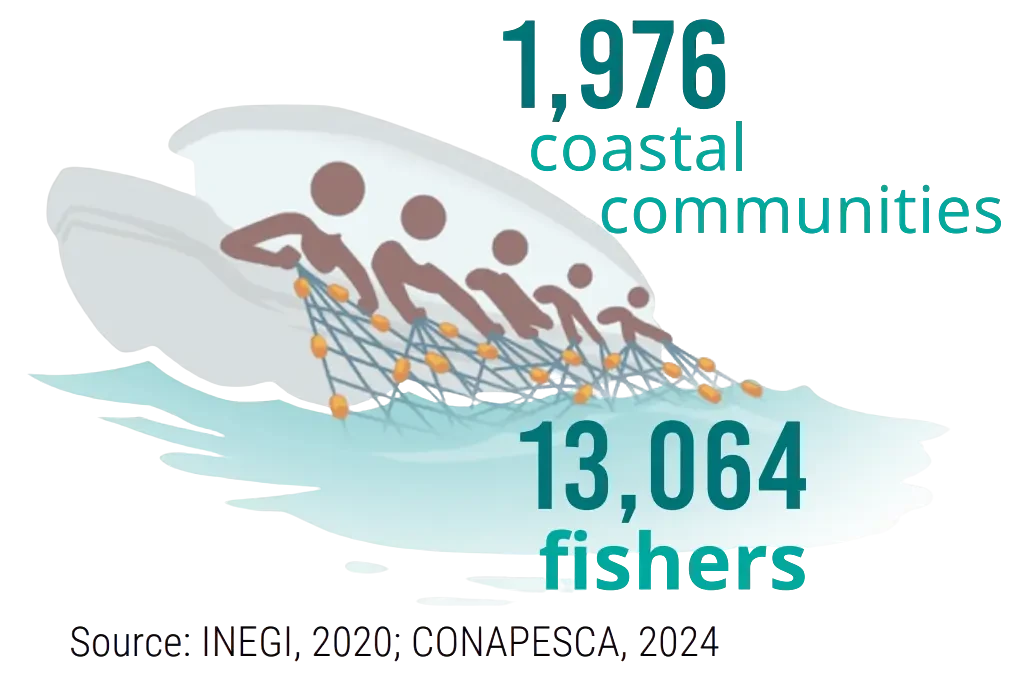
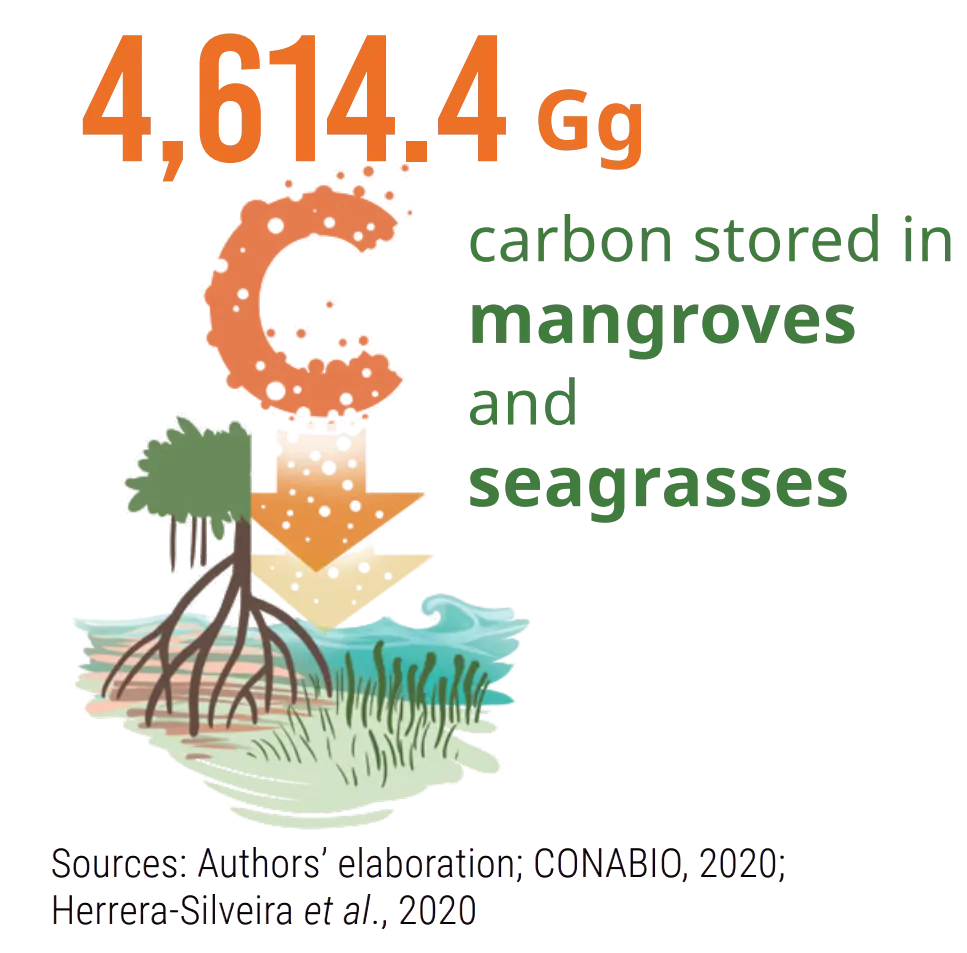
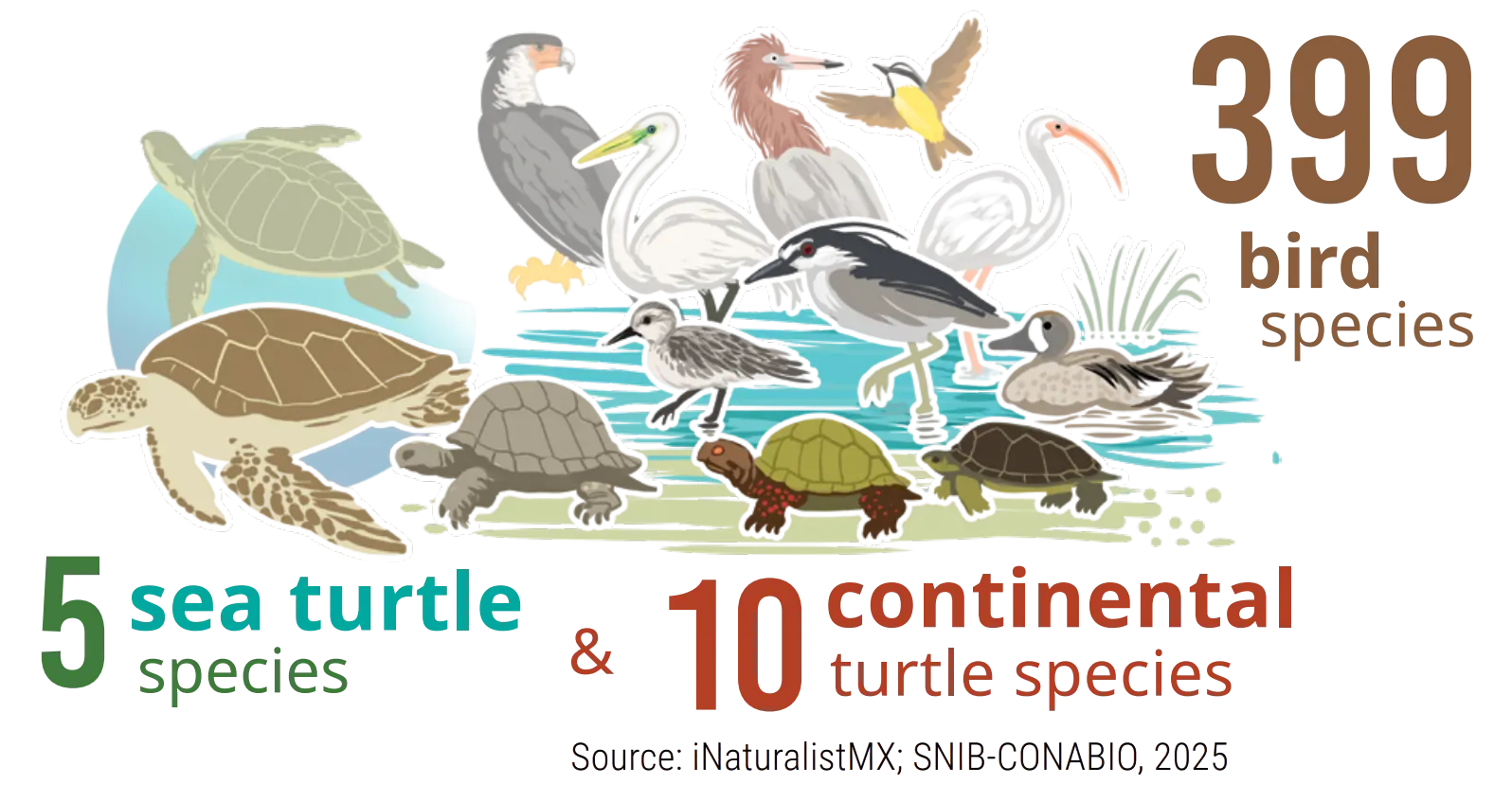
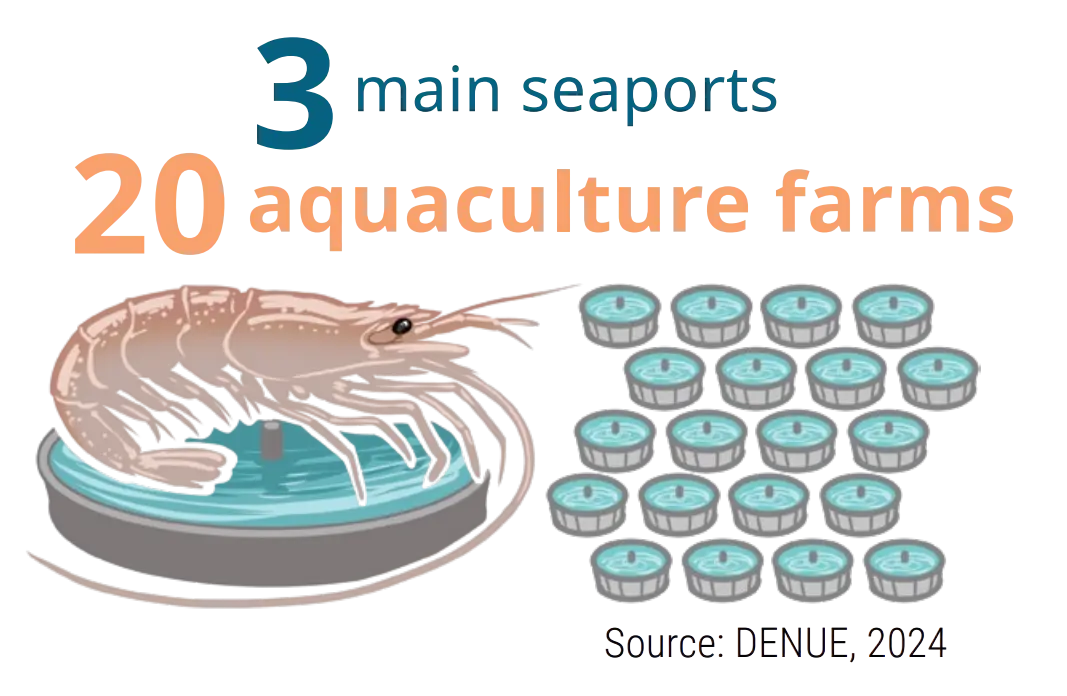
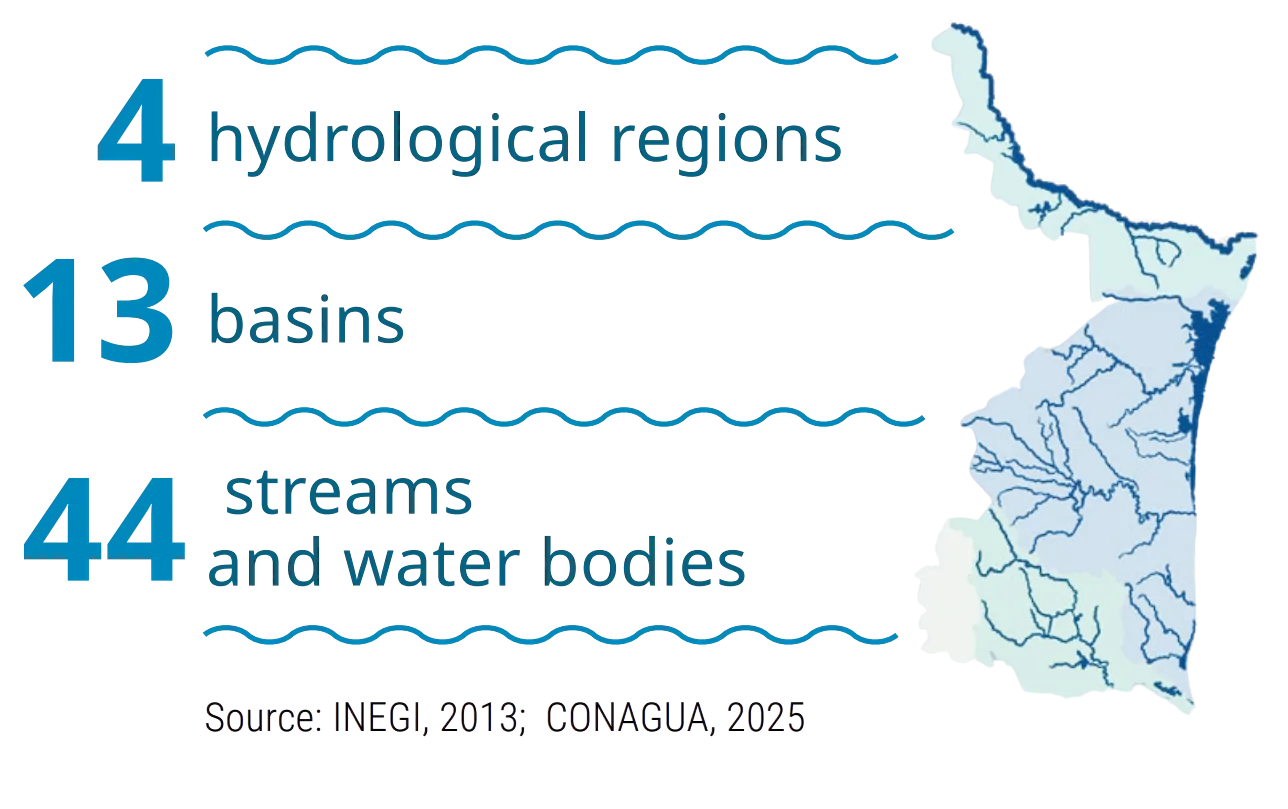
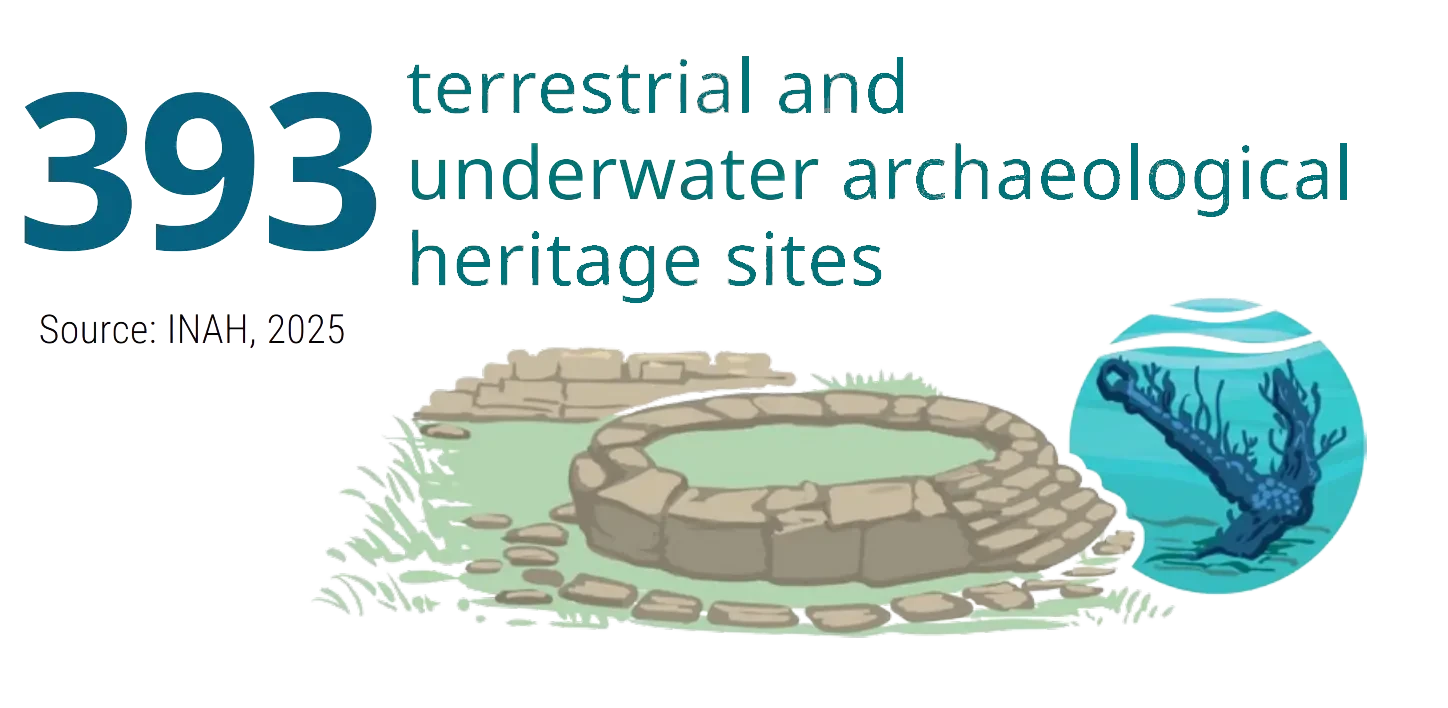
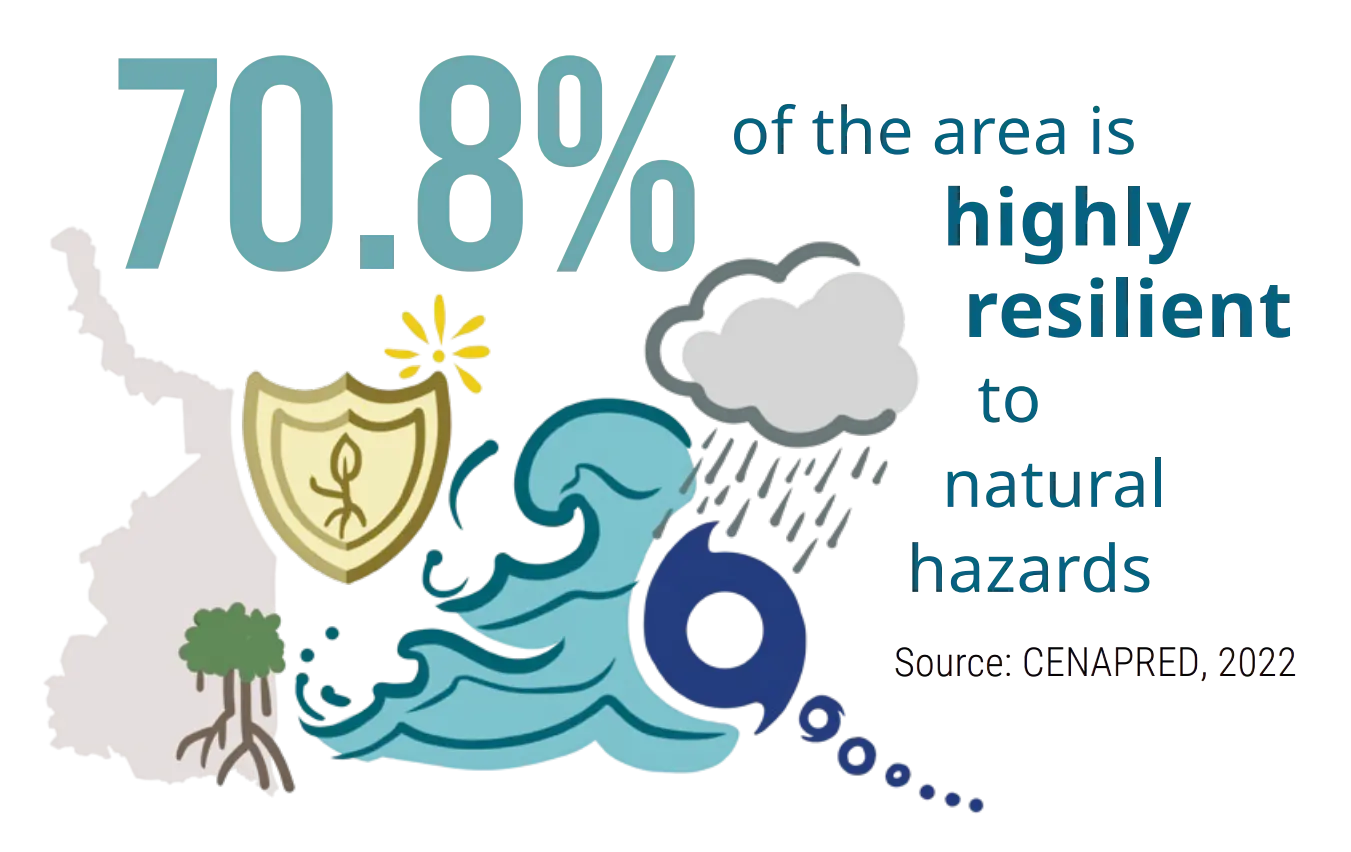
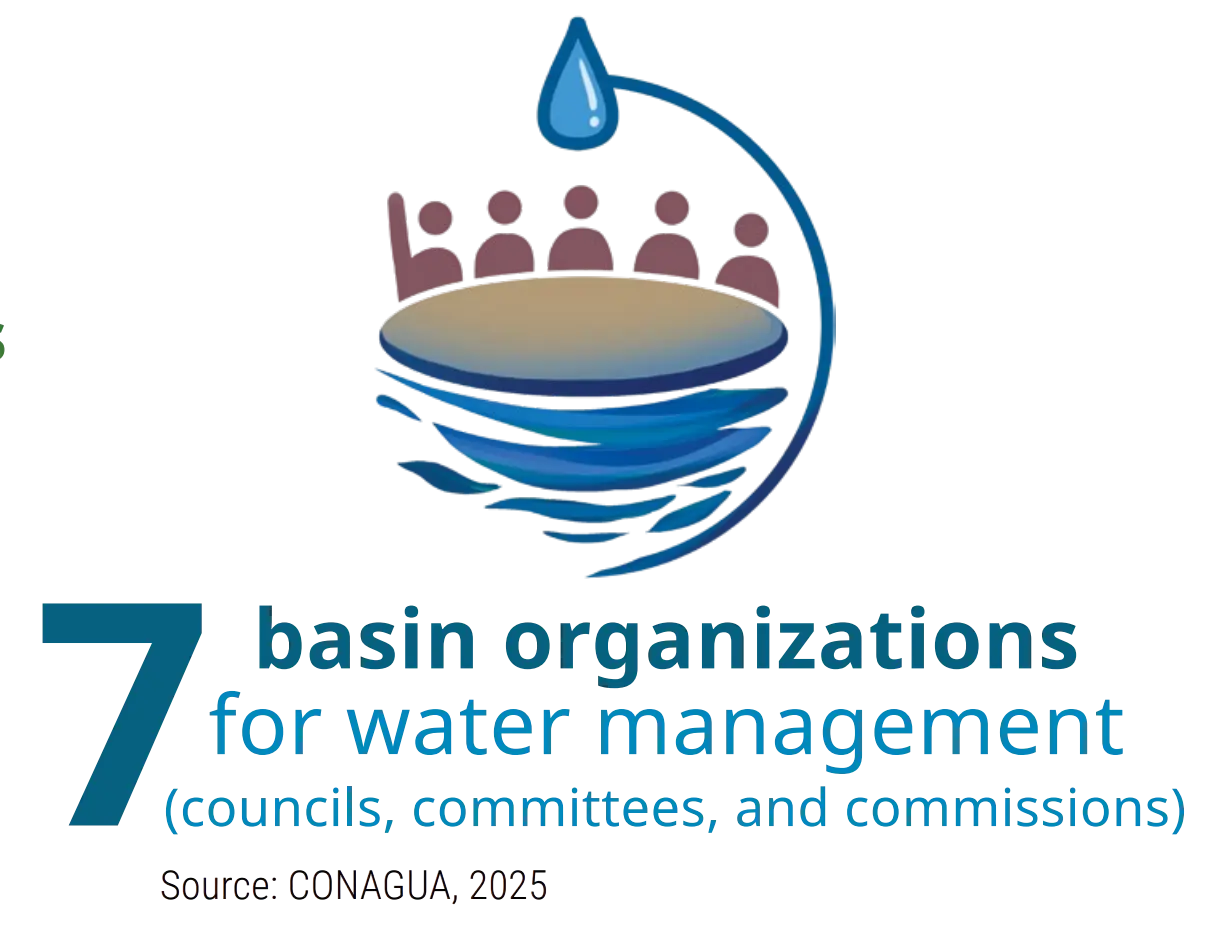


Importance of the Tamaulipas Coastal-Marine Zone
Implementation of the Strategic Action Programme for the Gulf of Mexico Large Marine Ecosystem (PAE GdM)
Coastal-Marine Zone Tamaulipas
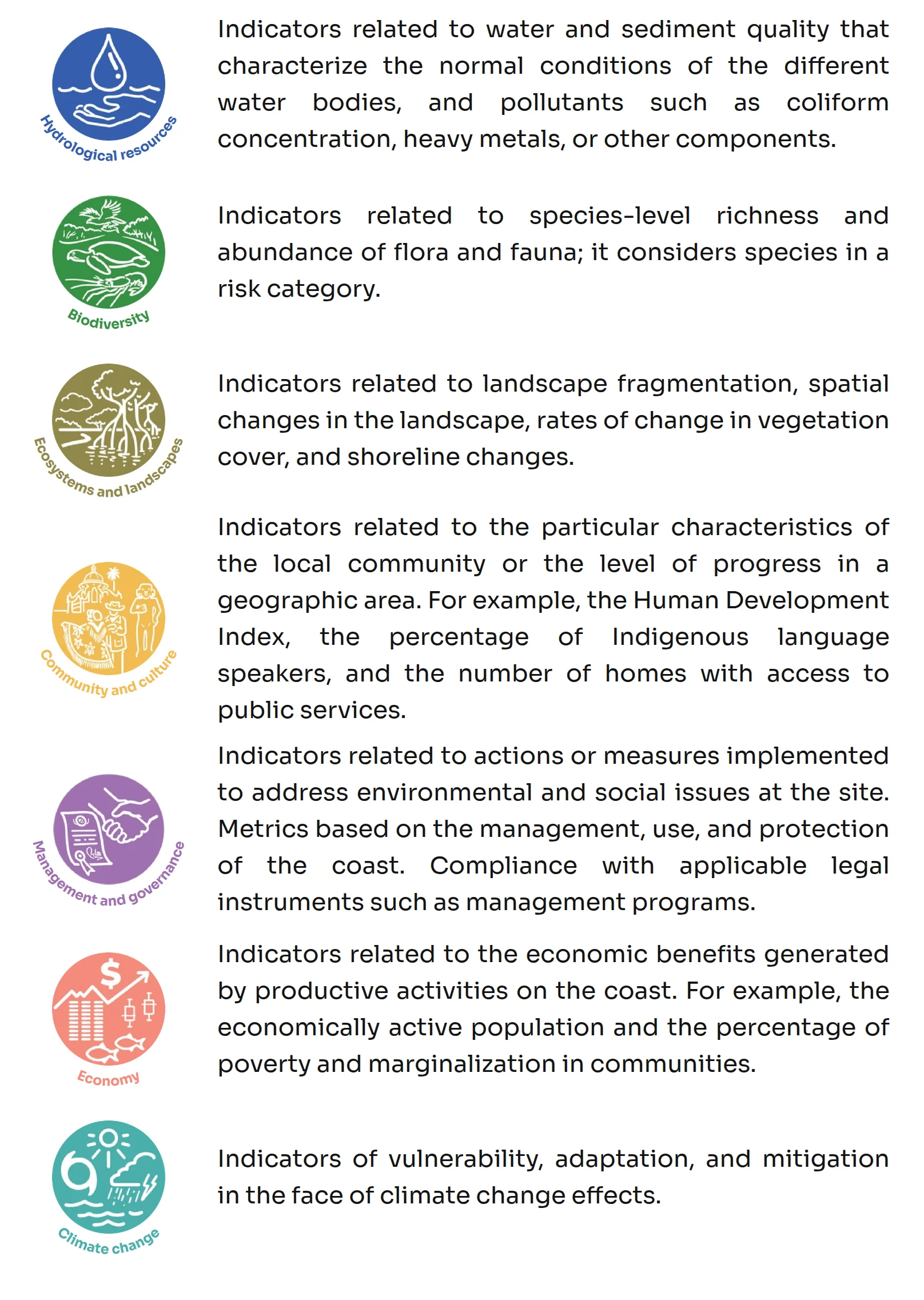
Thematic groups
↑ Select a thematic group to see its indicators
Indicators
INDICATORS
Coastal-Marine Zone
Tamaulipas
Thematic groups
↑ Select a thematic group to see its indicators
Indicators
STORIES FROM THE COAST

EcoAve
La Pesca, Tamaulipas
Caring so we can continue, resisting so we can flourish

Photo: Karina Ocaña
COASTAL-MARINE ZONE
TAMAULIPAS
THROUGH TIME
EVERYTHING IS CONNECTED: people and nature

RECOMMENDATIONS







PARTICIPANTS

Martínez Olguín, O., ACUA; Balderrama Alarcón, J.A., Reyes Monsiváis, S.S., API Tamaulipas; García, J., Guillermo Quiñones, J., Loera, B., Loera, C., Molina, D., Villa Cepeda, L., Villanueva, B., Campamento Tortuguero Barra del Tordo; Acosta Torres, R.A., Dechnik Vázquez, Y.A., Lozada Rodríguez, J.R., Vázquez Pérez, E.U., CFE; Caballero Briones, F., Lima Castillo, M.G., Ulloa Torres, M.J., CICATA, Unidad Altamira, IPN; Molinero Hernández , S., COFEPRIS; Cavazos de la Vega, B., García Reyes, L., Comisión de Caza y Pesca; Caballero Aragón, H., CONABIO; Luna Reyes, R., Mercado Muñoz, F., CONAFOR; Calzada Martínez, E., Hernández Méndez, M., Martínez Ortiz, J.A., Maya Morin, J., Sierra Flores, R., CONANP; Lerma Quiroga, D., CONANP – APFF LMyDRB; Acosta Sánchez, H.H., López Hernández, M., CONANP – Santuario Playa Rancho Nuevo; González Baca, C., Salinas Ordaz, D., CONANP-DRPCGM; González Escandón, S.M., DIF Tamaulipas; Gallegos Rivera, R.T., Dirección de Desarrollo Rural y Sustentable; Cuevas Rivera, M.L, Herver Zarate, R., Márquez, P., Dirección de Ecología y Medio Ambiente, Altamira; Padilla Castillo, M.J., Dirección de Ecología y Medio Ambiente, Tampico; Vázquez Gallegos, N., Dirección de Educación Municipal, Aldama; Alfaro Barraza, L., Dirección de Ejecución de Medidas para Adolescentes; Colorado Dapa, M.G., Colorado Lara, J.C., Dapa Lara, G.G., Dapa Morales, J.M., EcoAve; Francioli, I., Gobierno del Estado de Tamaulipas; Badillo Galvan, E., Bonilla Escobedo, C., Lozano Amaro, E., Rodríguez Moreno, K., Gobierno Municipal de Aldama; Echevarria Caballero, I.I., Henggeler Rivera, M.G., Hernández Torres, J.J., Pumarejo Armas, F., Rodríguez Espinoza, C., Gobierno Municipal de Altamira; Martínez, M., Peralta Arriaga, S.L., Gobierno Municipal de Ciudad Madero; Hernández Alfaro , A., Gobierno Municipal de Jiménez; Alarcón Cerna, A.R., Gobierno Municipal de Matamoros; Rangel Mellado, R.M., Gobierno Municipal de Soto la Marina; Cantú Rodríguez, M.O., Gobierno Municipal de Tampico; Guzmán Hernández, A.J., ICEST; Ramírez González, L.A., IICA; García Solorio, L., González Cruz, A., IMIPAS; Ocaña Espinosa de los Monteros, K.G., Serrano Flores , E.D., IMT; Martínez Salgado, C.P., Mijangos Carro, M.A., Piñón Flores, M.A., Sánchez, J., IMTA; Armillas Canseco, J., Barragán de la Parra, M.G.R., De la Rosa Padrón, Z., López Rodríguez, O., Morales de la Serna, R., Mota González, M.C.H., Oyervides Martínez , C.B., Rodríguez Molinar, M.E., Sandoval Salinas, A., INAES; Arano Recio, D.E., Valdés Lara, A.C., INAH Yucatán; Barba Meinecke, H., Piza Chavez, A.R., INAH-SAS; Rodríguez Hernández, A., INECC; Gómez, M.C., Hueda Tanabe, Y., Villagómez Velázquez, T., INPI; Trejo Igueravide, D., ITAVU; Romo Contreras, J.V., PAUT; Cepeda Acosta, F.J., Permisionario de pesca; Huerta Carreón , H.E., Valdez Cruz, J.A., PROFEPA; Barriga Vallejo, C., Briones Castillo, M.A., García, O., Puente Rodríguez, F., Salazar Ortiz, J., Varela Echavarría, A., Pronatura Noreste, A.C.; González Nicacio, S., Restaurante Nuevo Milenio; Camarillo, A., Cepeda Acosta, A.A., Cepeda Acosta, D., Figueroa, A., Hernández, C., Padilla, M., Sánchez, S., Santoyo, A., Torre, M.J., S/I; Cruz Cruz, I., Del Bosque Valadez, J.M., Guillén Lorenzo, R., Herrera Castillo, J.M., Lerma Ramos, L., Tovar Ortiz, J., SDRPA; Mata Esparza, N.P., Reyes Mata, J.A., Torres Rodriguez, J.E., SEBIEN; Barrientos Arellano, P., González Hernández, A.K., Guevara Rodríguez, M.V., Salinas Maldonado, E.B., Secretaría de Administración; Almaguer Hernández, J.H., Bortoni Gómez, I., Torres Castillo, N.E., Secretaría de Economía; Ameca González, J.E., Hernández Guerra, M.P., Martínez, C., Secretaría de Educación; Gallegos Montalvo, L., Mata Baez, D.M., Treviño Lara, A., Secretaría de Finanzas; Reta Heredia, I.J., Rocha Rojo, M.N., Secretaria de Obras Publicas; Alfaro García, P., Secretaria de Programas Federales; De Luna Gonzalez, C.D., López Mejía, S., Muro Hidalgo, K.A., Villanueva Huerta, A.G., SEDATU; Ramírez Fajardo, G., Silva Santacruz, R.A., SEDENER; Heinz Becker, K., Hernández Córdova, J.O., Ortiz Flores, A.A., Peñaloza Medellín, D.A., Silva Saldaña, R.S, SEDUMA; López Coble, M., Márquez Zumaya, V.M., Mendoza García, M.J., Rojas García, M.B., SEMAR; Hernández Cazares, M., Rodríguez Barrientos, J.A., SEMARNAT; Galván Tovar, J.F., Moreno Trujillo, L.I., SENASICA; Jael García, N., Marín Zamarripa, G., Morales Azua, M., Núñez Mordido, R., Sánchez Espinoza, E., Sociedad de Producción Pesquera Pesca; Gómez Rivera, J.C., SRHDS; Vela Reyna, F., STPS; Gómez Nicolás, M.P., Subsecretaría de Hidrocarburos; Montoya González , P.R., Subsecretaría de Pesca y Acuacultura; Alarcón Ruiz, E., TecNM Ciudad Madero; Olmeda de la Fuente, S.E., Rodríguez Castro, J.H., TecNM Ciudad Victoria; Betanzos Reyes, M., Colorado, J., Domínguez H, M., Domínguez, J., Guzmán Ramírez, E., Hernández, G., Nava Castillo, R., Trejo Flores, A., Terra Asesoría Ambiental S.C.; Cabañas Vargas, D.D., UADY; Herrera Barquín, H., Medina, D.Y., UANL; Carreón Zapiain, M.T., López García, E., Oñate González, E.C., UANL-FBC; Arellano Méndez, L.U., Garza Torres, H.A., Guerra Pérez, A., Mora Olivo, A., Requena Lara, G.N., UAT; Valdez Iuit, J.O., UNAM-FC UMDI Sisal; Ávila Foucat, V.S., Martínez Córdova, C., UNAM-IIEC; Carro, K., Universidad Cultural Metropolitana; Bustamante, A.K., García Martínez, M., Garzón Sosa, S.B., Ingalls, A.F., Rosales Ángeles, F., UNOPS; Ovando Rocha, M.S., UT Altamira; Amador Cano, G., Cepeda Martínez, L.M., Colorado Dapa, J.F., Escalante Ramos, M., Higuera Marín, F.A., J. Luna, B.A., Maya Albarrán, E.C., Montelongo Alfaro, I., Pérez Álvarez, K., Reyes Rivera, P., Rodríguez Martínez , N., Rudy García, J.M., Saenz Aguilar, Y.V., Velázquez Narváez, A.C., Vidal Ochoa, J., UTMART.
Carmona Escalante, Armando, Gallegos Fernández, Sandra, Granados Martínez, K.P., Hernández Cristerna, M.J, López Alcántara, V., Morales Méndez, D, Ortigosa Gutiérrez, J.D., Pérez Rivera, E.F., Reyes Aguilar, A.X., Rodríguez González, M.P., Vázquez Verdín, J.M.
Salles Afonso de Almeida, P., Ávila Foucat, V.S., Simões, N.
Guerra, A.
Government: 116; Academic: 37; CSO: 36; ND: 7; Private: 6
PARTICIPATING INSTITUTIONS
























































ABOUT THE REPORT CARD
This Report Card was developed from two virtual workshops held from November 6 to 8, 2024, and from October 8 to 10, 2025, with a total of 137 participants. A field phase was also carried out from March 15 to 22, 2025, with 65 participants interviewed and 7 key communities visited. The process followed the report card development guide by Costanzo et al. (2017), adapted by LANRESC.
This Report Card was produced with funds from the subproject 'Development of five Report Cards in the Gulf of Mexico,' code UNOPS012, executed by the National Laboratory for Coastal Resilience (LANRESC) and administered by the Institute of Engineering of the National Autonomous University of Mexico (UNAM), within the framework of the GoM SAP Implementation project, financed by the GEF and supported by UNEP, UNOPS, and SEMARNAT. It was co-financed by the Coordination of Scientific Research of UNAM. We thank CONANP and Pronatura Noreste for their support during fieldwork.
The content of this document is intended for educational and general outreach purposes. The information was provided and validated by the workshop participants themselves. The data supporting this Report Card were collected as of November 21, 2025. The purpose of this tool is to support informed decision-making; however, decision-making should not be limited only to the information presented in this document.